


Test Results
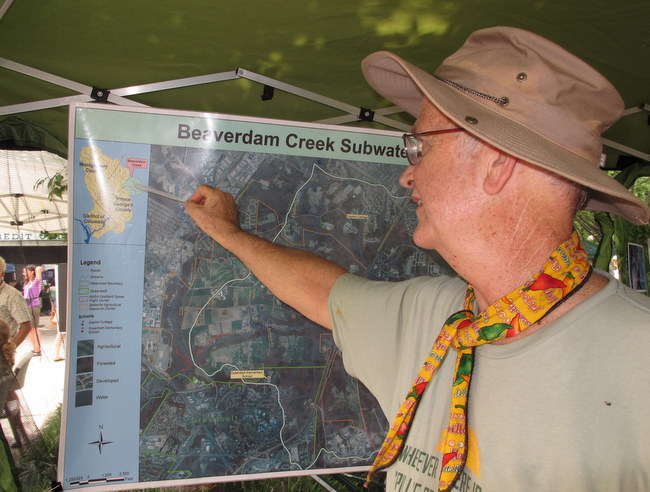
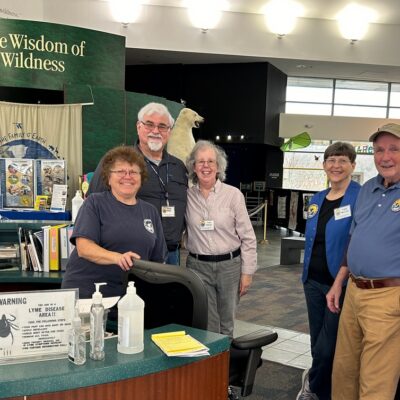
It took me a while to figure out where the rain that falls on Greenbelt ends up, but thanks to Mark Cristal here, I’ve learned that it’s the Beaverdam Creek (and then into the Anacostia River). Beaverdam Creek has a watch group that works to protect and 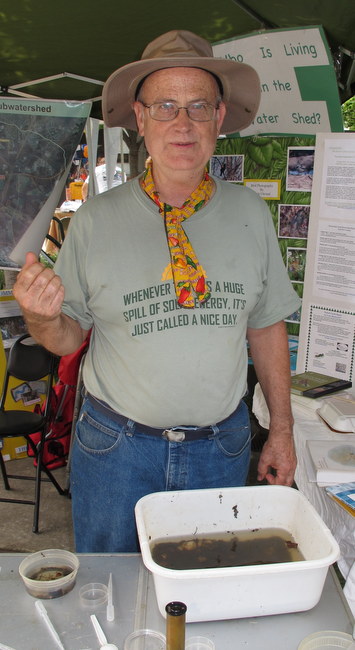 improve the creek, and that includes testing its quality four times a year. For the test they remove and study whatever’s at the bottom of the creek, shown in a plastic bin in the photo on the right. Seems that the diversity and quantity of the critters in the Beaverdam indicate it’s one of the cleanest subwatersheds in our region. Mark, who’s president of the Beaverdam Creek Watershed Watch Group, explained this to me from the group’s information booth in Roosevelt Center over Labor Day weekend.
Why so Clean?
According to Mark, the large amount of amount of forest and agricultural land that drains into the Beaverdam greatly reduces the amount of impermeable surface area in our subwatershed, which then reduces the amount of stormwater run-off that scours stream beds and washes trash and pollutants into the streams.
And thanks to the USDA for taking steps to leave a margin of unplowed and unmowed land along the creek, which reduces reduces run-off from fields and maximizes filtration of stormwater. These riparian buffers have really helped the creek.
Maps, Please
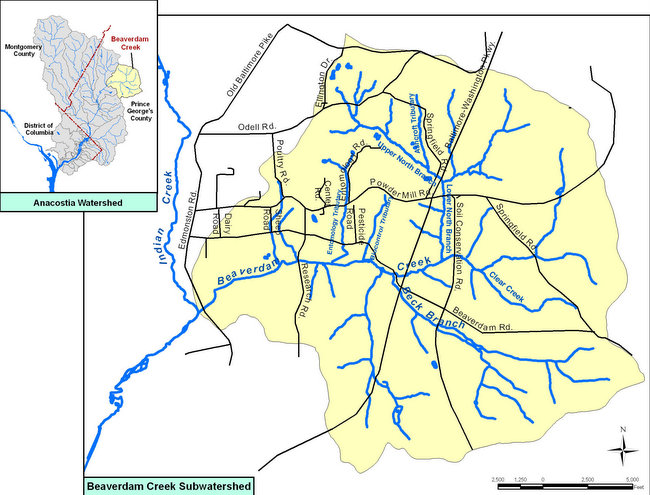
I asked for visuals to help me understand the creeks, rivers and land masses we’re talking about here and Mark directed me to these from the Metropolitan Washington Council of Governments.
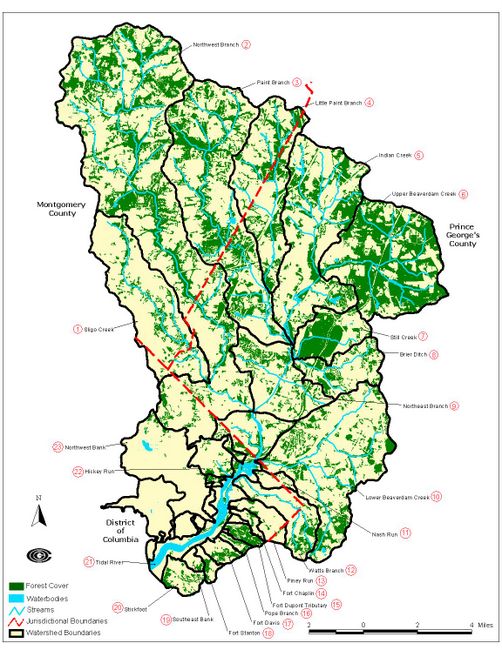
The next map shows forest cover for all the subwatersheds, which lends evidence to our claim that we have one of the cleanest in the Anacostia watershed. Love all that green!





Ben Fischler
Beaverdam Creek watershed is wonderful land, but it is mostly within BARC and includes only the northern edge of the City of Greenbelt. The maps you include show that Beaverdam Creek is a tributary of Indian Creek and that most of “old” Greenbelt drains into Indian Creek (via Greenbelt Lake). Indian Creek is much more challenged by industrial parks and new development upstream of Greenbelt, and potentially by the redevelopment of the Greenbelt Metro station. East Greenbelt and Greenbelt National Park are within the watershed of Still Creek, another tributary of Indian Creek. This is why Greenbelt has three active watershed groups: Beaverdam Creek Watershed Watch Group, Friends of Still Creek, and CCRIC (Citizens to Conserve and Restore Indian Creek).