


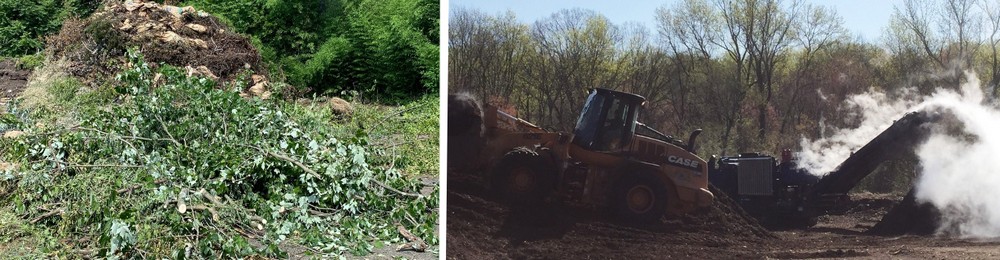
 Memes on our social feeds are telling us to “Leave the leaves!,” one of the benefits of which is not dumping leaves in landfills, which makes me wonder if that’s still happening. Especially here in Greenbelt – do OUR fallen leaves end up in landfills?
Of course not! They’re picked up by Public Works and left on piles at the end of Northway, behind our cute little Observatory. Leaves picked up by GHI are also dumped there. Greenbelt Sustainability Coordinator Luisa Robles told me that at least in our region, leaves no longer end up in landfills.
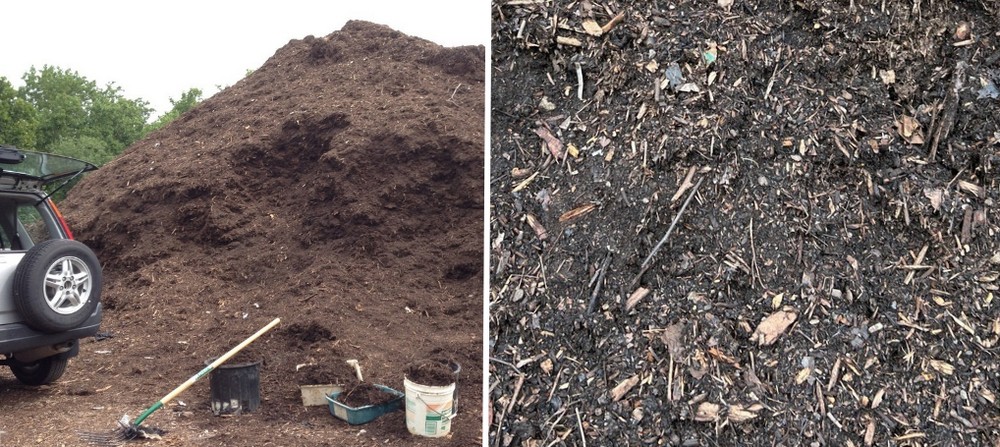
Luisa explained for me that twice a year the city hires a tub grinder to grind up all sorts of yard waste – leaves, branches – and spew it all into piles. The piles sit until the grinder comes back, when they’re ground again, and moved around. This method is referred to as “static piles,” and it results in what’s called “dirty mulch” because it includes all the plant parts, and no screening.
(By contrast, College Park uses wind rows to create their mulch, and their results are “proper compost” that’s more uniform and finely textured. The compost they create is popular in the area, and I remember my Takoma Park neighbors ordering it for delivery.)
Get your free Northway “dirty mulch,” and what to do with it
Back to our dirty mulch pile on Northway, the city WANTS us to use it! Luisa shocked me with the news that each time a grinder is used it costs the city $8-15,000, varying because the city is charged by the cubic yard. But the demand for the product doesn’t meet the supply, so come get it!
Use “dirty mulch” as fill dirt for low spots, for the bottoms of pots, or to mix into garden beds with clay soil to improve its organic content. It’s also very useful on paths or muddy areas, where it helps soak up moisture and reduce mess. The city donates some to the composting project that it established with Compost Crew at Trinity Church, which composts vegetable scraps, so needs the “browns” from city leaves. And some dirty mulch is distributed to gardens for residents to use.
I can’t recommend using this so-called “dirty mulch” as actual mulch – topping off your borders. That’s because it’s almost completely decomposed, so it looks like soil, not mulch. Plus, it ACTS like soil, meaning it’s a good growing medium for weeds – the opposite of what mulches need to do.
And a frequent question I hear about this mulch is about weeds it could introduce into your garden, and I’ve heard a couple of complaints. But when I’ve used it I haven’t noticed that problem, and several Greenbelt gardening experts have told me they’ve had no problems with it, so your mileage may vary, as they say. (One Master Gardener says she’s found more weeds in commercially bagged mulch.)
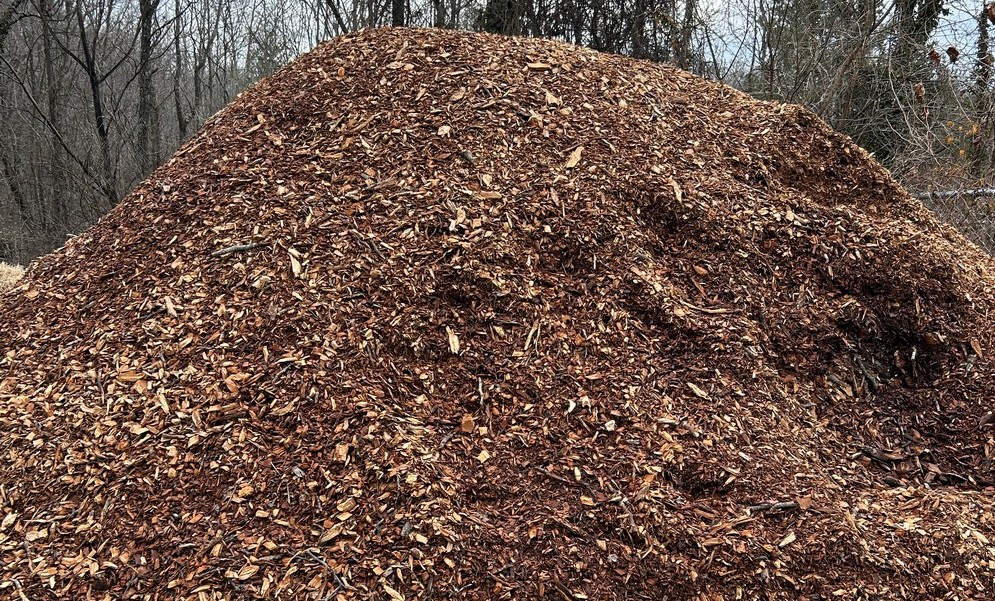
For real mulch, our free wood chips are great
Wood chips are my preferred mulch because in addition to being freely available here in Old Greenbelt, they last a year or two – much longer than most mulches. They improve soil, And I like the look!
The easiest place to get wood chips is near the “dirty mulch” piles at the northern end of Northway – if they’re there, which happens when the city has a lot of branches to dispose of.
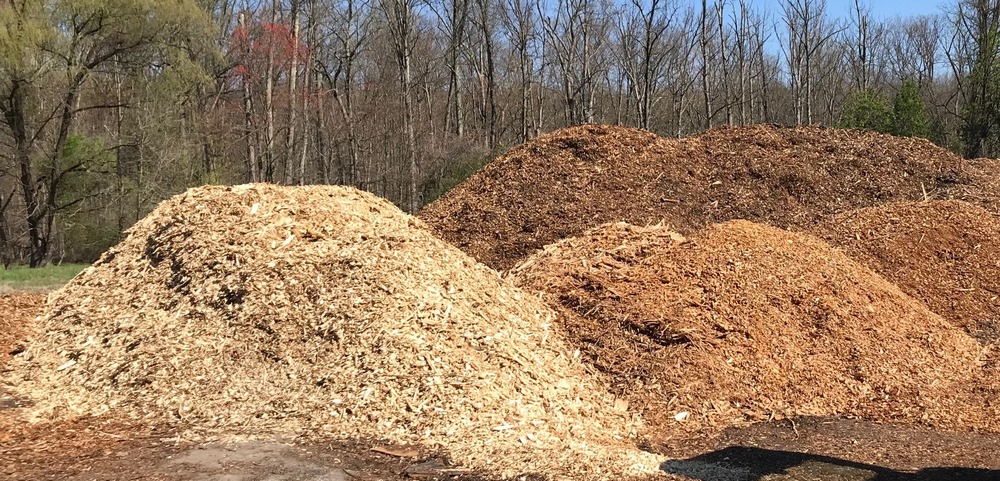
The best reliable source of woodchips that are just right (not too chunky, not too ground-up) is available to anyone to pick up behind the GHI offices at 6 Hamilton Place – but only when the office is open and someone has opened the gate to where the wood chip piles are. (Even better, wait a hour or two after the office opens.) To find the fence, turn left just before the boatyard. The wood chips are available for anyone because, like the city, GHI has too many of them and wants people to please take them!
Where Prince George’s leaves go – into the perfect soil amendment – Leafgro!
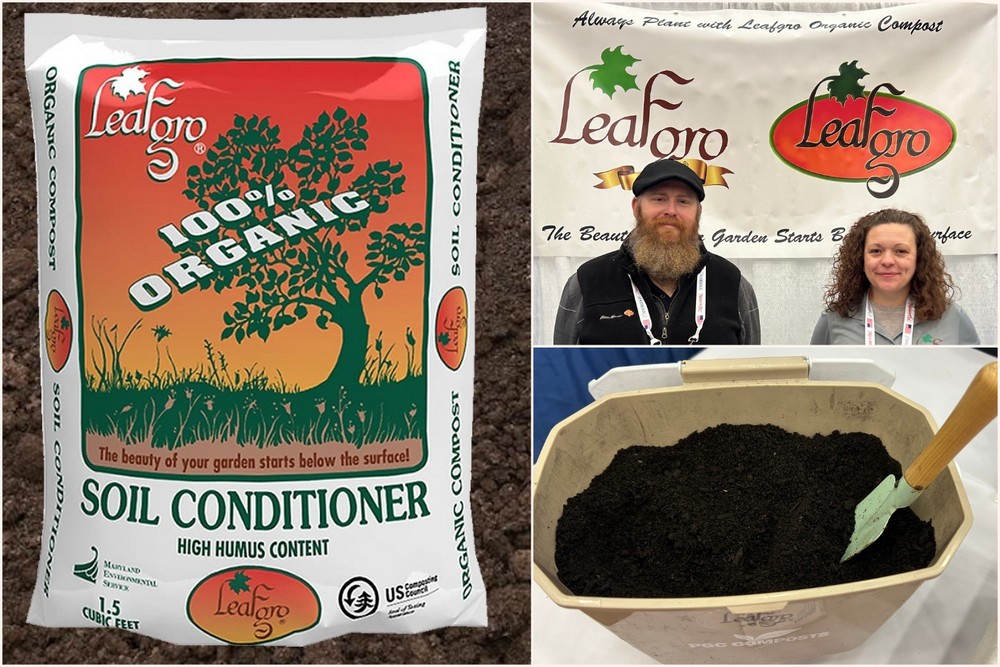
I became interested in learning where our leaves go when I attended a Baltimore nursery trade show in January and came upon a booth about Leafgro – the wonderful, affordable “soil conditioner” produced for PG and Montgomery Counties. Here’s how it’s described:
“Leafgro® is a soil amendment used extensively in gardens and lawns by homeowners and landscaping industry professionals as a source of humus for soil improvement. Yard trimmings such as leaves and grass clippings are diverted from landfills and instead brought to a composting facility, where the material is composted to create a valuable resource. Leafgro® is an outstanding example of recycling at its best!”
And here’s how it works:
Since 1991, Prince George’s County’s leaves and yard trimmings have been collected and delivered to a Maryland Environmental Service (an independent state agency acting as a nonprofit) in Upper Marlboro and are stored for decomposition. “After the decomposition phase, all the material goes through an extensive screening process to remove any unwanted substances such as plastic or metals. The end product is an excellent soil amendment with applications for home and commercial use.” Source.
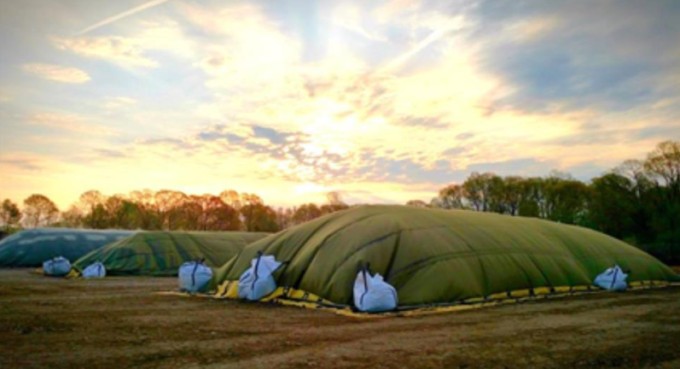
I’m telling you, this stuff is black gold! I’ve used it for decades to improve clay soil and to fill in depressions in the yard and I highly recommend it.
How to get it:
Pick-up: Commercial landscapers can pick up Leafgro at the county’s Upper Marlboro facility in trucks that hold at least the required minimum of 5 cubic yards. Homeowners are discouraged from going to the site due to the large vehicles on site but are welcome to have a professional pick up the Leafgro for them – a minimum load of 5 yards, at $24/yard. (Delivery service is not provided.)
Buy retail: For smaller quantities, Leafgro is also bagged in 1.5-cubic yard quantities (by the organization’s Montgomery County facility) and provided AT COST to retail stores like big boxes and garden centers, for the current price of $6 (at Home Depot) versus $10 for its competitors. (MD Environmental’s PG doesn’t bag the product, thus avoiding all that plastic.)
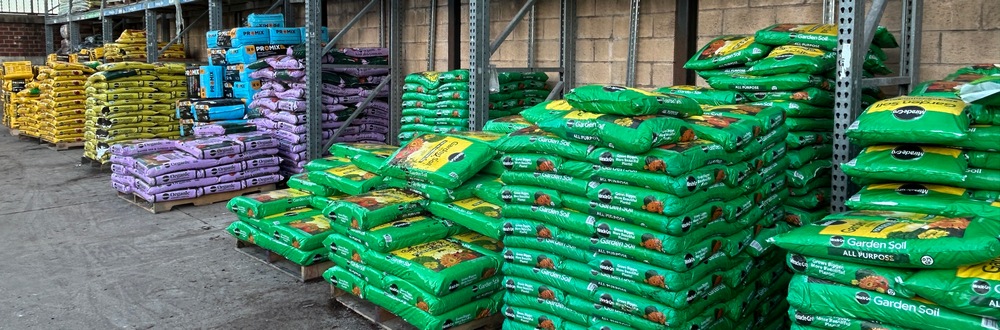
I checked and the College Park Home Depot does stock Leafgro – in the garden department at the end of this long row of competitor products that cost a lot more, most of which are made by Scotts-Miracle Gro, a company I prefer not to support. I explain why in this article from 2014 when DC’s school superintendent quit and joined the Scotts board, which the media assumed would be a noncontroversial position. To summarize without getting sued, I’ll just summarize the company’s controversies this way: a problematic CEO, marketing that creates artificial demand for their products, Round-up, green-washing, and bird food found to kill birds
Another excellent compost, especially for growing edibles, is the one produced by Compost Crew, mentioned above. I learned about it from Greenbelt-Beltsville Garden Club president Melissa Mackey, who swears by it and told me that her community garden (Henry’s Hollow) had received a hefty load of it through a city grant.




Leave a Reply