


Greendale, Wisconsin is known to most Greenbelters as one of the two other “greenbelt” towns created during the New Deal era. (The other is Greenhills, just outside Cincinnati. I visited and reported on it here and here.) Like Greenbelt, Greendale’s historic district is included in the National Register of Historic Places and has been designated a National Historic Landmark.
I haven’t visited Greendale but last summer I happened to meet a historic preservationist from Wisconsin, who raved about Greendale. I was like, “Really?” But he piqued my interest so I started inquiring about it.

Greendale Village (yes, it’s always a “village”) is just 11 miles outside of Milwaukee, closer to the downtown than Greenbelt is to D.C. Notice it’s also adjacent to a botanical garden, and the airport. The population in 2020 was 14,854. Just like here in Greenbelt, African-American families were initially excluded.
Greendalers vote for their city council in one of 11 wards, unlike Greenbelt, where all our councilmembers are at-large and represent all residents.
See Greendale
To see what Greendale looks like today, watch any of these videos:
- Driving through Greendale (with snow) and history.
- Downtown tour on foot, without snow.
- Visitors taking tour of painted chimneys.
The Plan

To help in managing the more than 2,000 men building Greendale, workers were directed to the “A section”, the “B section”, the “C section”, etc. and this alphabetical scheme has endured. Still today, all streets in each section begin with the same letter — the A section includes Angle Lane, Apricot Court,” etc. Source: Wiki:
The Greendale plan included neither underpasses nor a swimming pool – both considered too expensive. It also wasn’t planned around superblocks. For some familiar sights, notice on this map a Northway, Westway, plus a Churchway and a Schoolway, but the residential streets are short, narrow deadend street – very different from our street plan.
Housing

Greendale opened in 1938 with 572 housing units (compared to Greenbelt’s 552), and the homes are referred to today as “Greendale Originals.” They were generally made with concrete block construction or “cincrete,” a type of concrete, covered with cement paint outside and plastered walls inside. Most originally had Ludowici tile roofs, but some featured asbestos shingles. Some houses still have their original roof tiles. The Greendale Historical Society has collected some of the original tiles, making them available for residents who wish to repair their roofs rather than replace them.
There were no brick or frame units. Homes were positioned close to the street with the living room at the back of the house to allow residents a better view of their picturesque backyards. Source:Wiki:

274 of the “Originals” were single family homes, like these All are still standing and occupied..

Single-family homes today.

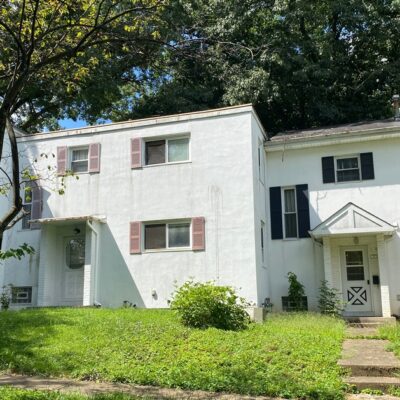
There are also duplexes, like these.

And there are rowhouses of more than four units, like these. There were no apartments in the original plan but there are one-bedroom units called bachelor apartments, located above garages. No units were built with with basements, which were deemed too expensive.
Like Greenbelt, the federal government sold all the original homes, mostly to their tenants, with the sale completed in 1952. (Of the three towns, only Greenbelt’s tenants formed a housing co-operative.)
Given the presence of so many single-family homes and proximity to Milwaukee, it shouldn’t surprise us that Greendale is referred to as an affluent suburb. Jane Stoller, board member of the Greendale Historical Society, told me their homes are larger and more expensive than Greenbelt’s because people in Greendale simply wanted single family homes: “It’s a Midwest tradition.”
The original homes are not allowed to be torn down. Asked about restrictions, though, I was told there’s “lots of siding” and other changes, including the installation of pools. The Village has zoning authority over the original homes, implemented by its architectural review board.
In 2011 the following improvements to Originals were completed: replaced windows with historically accurate energy-efficient models, restored the clock tower, and remodeled ceilings to better reflect the building’s original aesthetics. Exterior wooden elements were restored with historically accurate colors, patterns, and materials. Source.
Prices for homes in Greendale range from $250,000 for an original home, to $595,000 for a home in the newer subdivisions, according to Jane Stoller.
The Yards

Greendale homes are similar to ours (and unlike Greenhills’) in having garden and service sides, an unusual feature that’s touted by the visitors bureau (Discover Greendale). It urges visitors to “Come and see our ‘backward houses’! When you are in town you’ll notice we have backward houses…yes, it’s true! Visit Historic Downtown Greendale and we will point them out to you!” I’m told there are few fences in the yards of Originals and that 6′ tall privacy fencing is not allowed.
Business District

The original downtown area included the village hall, styled after Colonial Williamsburg, and several businesses. But by the 1970s the downtown had fallen on hard times, especially after the opening of Southridge Mall (the second largest in the state) in walking distance. The movie theater and a tavern closed, and there was no more hardware store, pharmacy or grocery store.
Then in 1996 the Village Center was bought by publisher Roy Reiman, who revitalized it for residents and to attract tourists. Reimer’s country-oriented publishing company covered topics like cooking and gardening, and specialty magazines for Wisconsin and Iowa – all with no ads. Reiman loved horticulture. A very visible and colorful feature of Historic Downtown Greendale are the 30,000+ flowers planted every year along Broad & Parking Street – in hanging baskets, sidewalk beds, and storefront planters – all thanks to Reiman’s love of flowers, his generosity and his love of Historic Downtown Greendale.
Since his death in 2024, there’s some uncertainty about what will happen now to the downtown. (Scroll down to the comments for some fascinating details about Reiman and Greendale.)

Downtown Greendale Today
The business area is now thriving, with a mix of shops and restaurants: three coffee shops (gathering places for many retired residents), several breakfast spots, a variety of casual dining areas, as well as two upscale dining options and even a wine bar.

The shops specialize in things like T-shirts, upscale jewelry, women’s clothing store and one that that sells “everything Wisconsin.” The library is located downtown, as is the post office. Downtown also includes Gazebo Park with free music and movies, and a weekly farmer’s market.
In 2020, Greendale’s median income was $95,000 and the median age 41. Greendale keep up with what’s happening via a regular newsletter from the Village government, and there’s a Greendale group on Facebook (which is almost entirely commercial, so I’m still looking for where residents chat online with each other).
Celebrations

In addition to the 40,000 flowers blooming in spring on downtown streets, Greendalers enjoy the display of 100,000 “holiday” lights in the Village Center. I’m told their many seasonal events are a “big deal and very popular.” Especially important are July 4 and “Village Days” in August, an event that started in 1939. The three-day celebration commemorates the history of the village, attracting thousands to its parade, live music, dancing, and food and drink. Much of the credit goes to the hard-working volunteer members of the Greendale Entertainment Association.

Greendale is also known for its folk art, including the painted chimneys of over 200 Originals, which are featured in a popular tour. Also, Greendale has a Garden Walk! (Okay, now I’m getting jealous.)
Visiting

When Greenbelter Barbara Glick and a friend visited Greendale last summer she started at the Welcome Center, where she found the exhibits “fabulous” and where a member of Greendale’s Historic Society arrived to give them a tour, including an Original home available on Airbnb. Barb told me the Welcome Center “made me feel as at home as I could be without being in Greenbelt.” Also, meeting people who grew up there, with pioneer grandparents reminded her of Greenbelt.
And Jane Stoller told me one of the displays in the Welcome Center features a reproduction of an original kitchen, complete with an authentic stove, refrigerator, sink, and metal cabinets. The Historical Society has its office in the space, too.

Discover Greendale.com offers tours, including the “Original Homes and Pathways Tour” that touts the chance to see “backward houses.” Also there’s a “Historic and Folk Art Chimney Tour.”

Three of the Original homes are available for rent on Airbnb, including this one that the Historical Society restored to look like it did in 1938, with a few modern amenities, such as air conditioning, TV, and Wi-Fi. Rental incomes supports the Society. The other Originals available on Airbnb are here, and here.
Greendalers visiting Greenbelt
Jane Stoller visited Greenbelt and reports that “It was fabulous to see you still have your theater. Ours is now a bakery.” She also admires our Art Deco architecture.
Tom Glynn, who lives in New Jersey but grew up in Greendale, has visited Greenbelt twice and is considering moving here after he retires next year. He wrote that “I think it’s interesting and impressive that Greenbelt promotes its New Deal history. My sense is that Greendale is more conservative, but I have no hard evidence for that.”
Which of the greenbelt towns is the best preserved?
Is it Greendale? The Wisconsin historic preservationist who raved to me about Greendale told me “Almost all of Greendale’s original greenspace has been preserved, as have all the walking paths. And just outside of Greendale are other green resources, thanks to Milwaukee County’s ‘fabulous’ system of county parks, like adjacent Whitnall Park. Like many of the parks, because it’s in Wisconsin, it has a beer garden.”
And somewhere in the writings about Greendale (sorry I can’t find it now) I found a quote by a University of Maryland professor (of all people!) calling Greendale “the most successful of the three [greenbelt] towns,” noting that its larger detached homes are the “prototype” for American suburbs, reflected in the dominance of single family homes.
Is it Greenhills? In the 2009 film “Green Towns USA: A New Deal” the Greenhills-based narrator claims that it’s the best preserved of the three because none of its greenbelt was sold off to developers. The greenbelt is completely intact, which is also cited as a big reason Greenhills is struggling, since the greenbelt has prevented the city from expanding its tax base. That’s led to its recent demolition of some original homes in favor of new homes. (Ironically, the film credits the greenbelt concept with “keeping each town within a livable size, and protecting it from urban sprawl.” Now it’s considered a “blessing and a curse.”)
(You can watch the 57-minute film here on Kanopy through library websites.)
Or Greenbelt?
As a Greenbelter for 14 years now, I’ve read or heard on many occasions that it’s the best preserved of the three cities. Certainly pro-Greenbelt claims are easier to find online – just check out AI’s results for “best preserved greenbelt city new deal.”
While Greenbelt DID sell off all its greenbelt, Paul Downs tells me that the city later bought back just under 20 percent of it (after some some kind of legal action). And while it seems true that Greendale is lacking in affordable housing (even at its creation), happily that can’t be said of Greenbelt, which continues to be more affordable than most of the DC area.
Thanks to sources, and call for more!
Thanks to Alan Pape for encouraging me to research Greendale; to Jane Stoller for patiently answering too many questions from me and providing present-day photos; and Greendale-raised Tom Glynn for his observations.
However! My search for more sources, especially people living in Original homes, has been a failure, to my surprise. None of the Greendalers I found on Reddit responded to my requests for a quick interview by “chat.” And after introducing myself as a Greenbelter working on an article, moderators of Greendale’s Facebook group wouldn’t post my request for people to talk to. With no explanation.
So if any Greendaler finds this article and lives in an Original or knows anyone who does, please contact me: editor@greenbeltonline.org.
Locally, thanks to Stephen Oetken of the Greenbelt Museum for turning me on to the “Green Towns USA” documentary, and to Barbara Glick for her photos and enthusiastic review.
Finally, a very Greenbelt-style statue

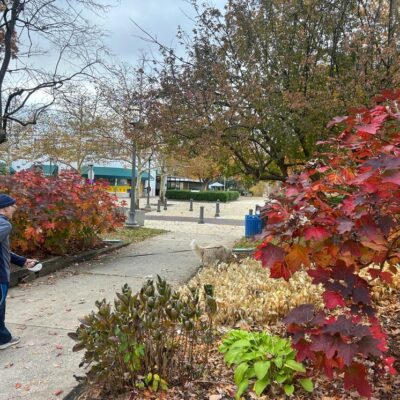
Left: The sculptor Alonzo Hauser was commissioned to design a flag pole sculpture for Greendale in 1938. Carved of limestone quarried at Currie Park in Milwaukee and dedicated in 1939, the sculpture displays six figures standing on a raised platform. The figures represent the people who would build and live in Greendale, and include a laborer with a shovel and another with a sledgehammer, a mother and child, a young woman with a tennis racket, and man in a suit and tie. Source. Photo credit: Mark Zalewski and the Greendale Historical Society.
Right: Lenore Thomas Straus’s “Mother and Child” in Greenbelt’s Roosevelt Center. Read about the sculptor here. more here. Photo by the author.





Alan Pape
Hi Susan,
All our kids are finally gone back to AZ and CO from our home here in SE Wisconsin. Your article on Greendale is great! Super job of investigating and comparing the two/three intentional communities. I will send you a brief video of our home at Christmas if you send me your email address.
Up with new towns!
Alan Pape
Susan Harris
So glad you like it – esp since you inspired it! I’ll email you.
Susan Harris
Via Facebook, Edward Scott Lyon (retired public garden horticulturist) posted this comment:
Even though Greendale claims Roy “bought” the mall, it was more of an arrangement with the city, he did not actually own the buildings but the arrangement gave him a great deal of control and he supplied the money for the landscaping as well as for an adjoining park. The Greendale article says they are not sure what will happen now that he has passed away, but I was with him in Greendale the year before and there was a fair amount of stress going on between him and the owners and he was thinking about pulling the funding anyway. At the time he made the arrangement, the mall and stores were in decline and, as he told me, he didn’t want to see tattoo parlors and smoke shops move in so that’s why he took control! He also influenced what stores came in. He worked hard to get Wild Birds Unlimited to come in and when they would not do it he provided the funding for a woman to start a similar shop which now also provides classes. He was responsible for the creation of the concrete Norman Rockwell and when Reiman Gardens decided to do the world’s largest concrete gnome, he was the one that recommended the company that created it. One of the most fun things he did was when he ordered thousands of daffodil bulbs for the publishing company and his home, he ordered thousands more and offered them to the community for free with the only stipulation to get them free was planting them in the front yards and not the back. To this day if you go into Greendale daffodil season all of the front lawns are an explosion of daffodils. Also pretty much next door is Will Radler, breeder of The Knockout rose and who’s one and a half acre property rivals any public garden.
Katherine Jarva
Another very interesting article, Susan. Thank you for all the research and the excellent writing.