


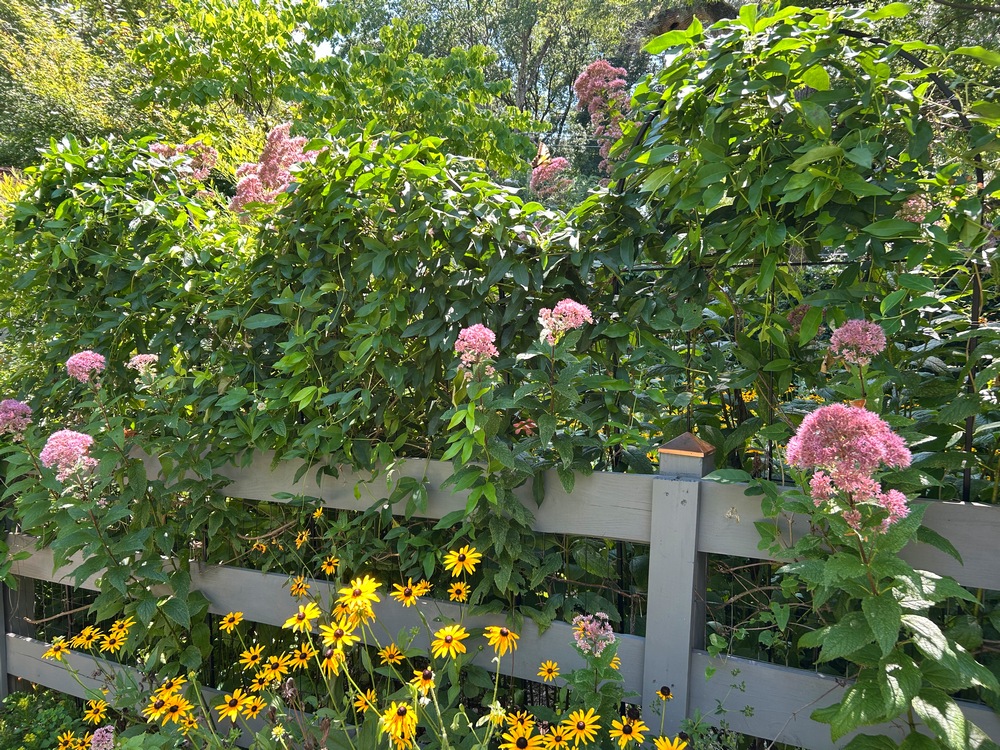
As a life-long gardener and mostly-retired garden coach, I’m saddened by how seldom I see GHI members IN their yards. And I don’t see a lot of seating areas that might entice them into their yards.
So I’ve collected this information in hopes of inspiring and helping others turn their yards into gardens – spaces for the flowers, for beneficial wildlife, and for the gardener’s own well-being, both mental and physical.
Of course some owners of hedges are happy with them, but this article is for anyone looking for an alternative to the problems that plague hedges, especially in small yards. The problems with hedges are described and illustrated with local photos in this companion article. Scroll down in that link to find out how hedges fit into Greenbelt’s unique, utopian landscape plan..
Needs for screening
Built screens are called “privacy screens or “privacy fences” but there’s a variety of reasons for wanting some amount of screening in our little yards:
- Separating conversation areas. Most existing privacy screens are between next-door neighbors, built right up against the building. The purpose is to allow members to be in their yards (reading, gardening, socializing, whatever) without effectively sharing the same outdoor room as their neighbor. Even if your neighbors are terrific (like mine), many of us enjoy alone time in our yards, with no conversation required.
- Actual privacy. On patios and porches especially, screening allows members to, for example, do their morning exercises out of the view of passersby. This is especially important for women, even more so if they live alone.
- Blocking bad views. I needed screening to block views of a parking lot on one side and the backs of garages on the other.
- Creating a garden. What turns a yard or park into a garden? The answer is some amount of enclosure, with vertical elements that create garden “rooms.” This type of home garden as an outdoor living space has become increasingly popular since the 1970s. Now many of them are aimed at supporting pollinators.
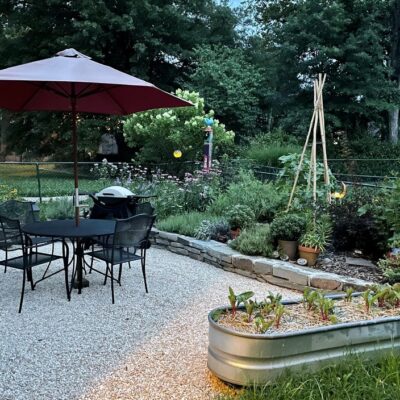
I googled “small gardens with seating” and noticed that they all have some kind of enclosure around the entire garden.
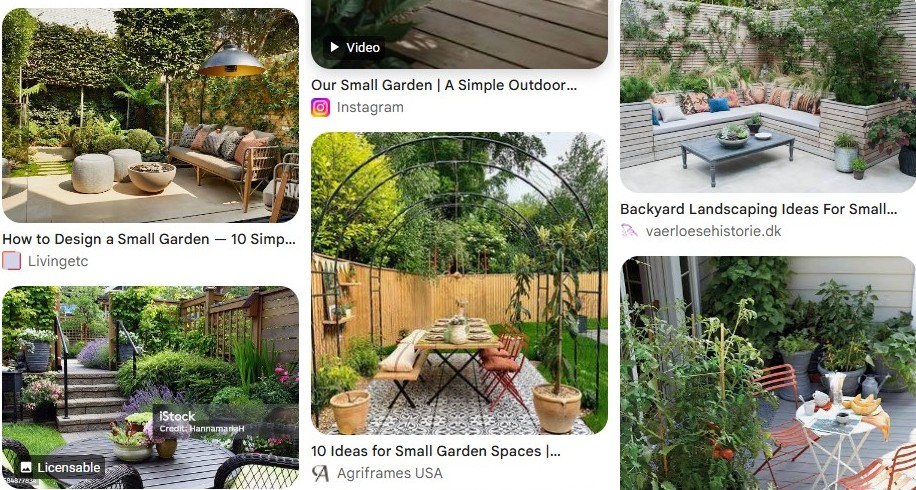
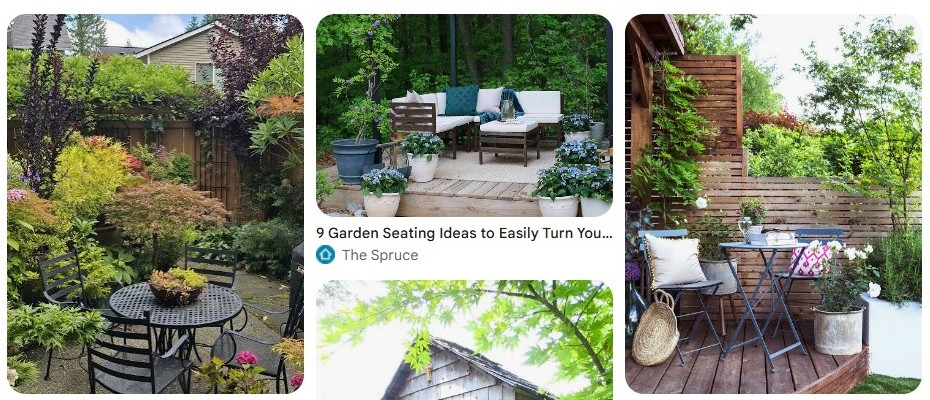
So if you need some screening, or if you have a hedge you’re sick of pruning or one that doesn’t provide the screening you need, you might consider effective and low-maintenance ways to create screening that don’t impinge on sidewalks or wall off yards from the community.
Other Ways to Use Plants for Screening
Mixed hedges, planted just where they’re needed
If you have plenty of room, you could plant a mixed hedge of several different species. Mixed hedges don’t look pitiful after one or two of the plants die. And due to the diversity of plants, they have greater wildlife value.
And with plenty of room, the plants can be staggered like in the photo below, to screen more effectively (because if they’re in a straight line they can’t be planted close enough to each other.)
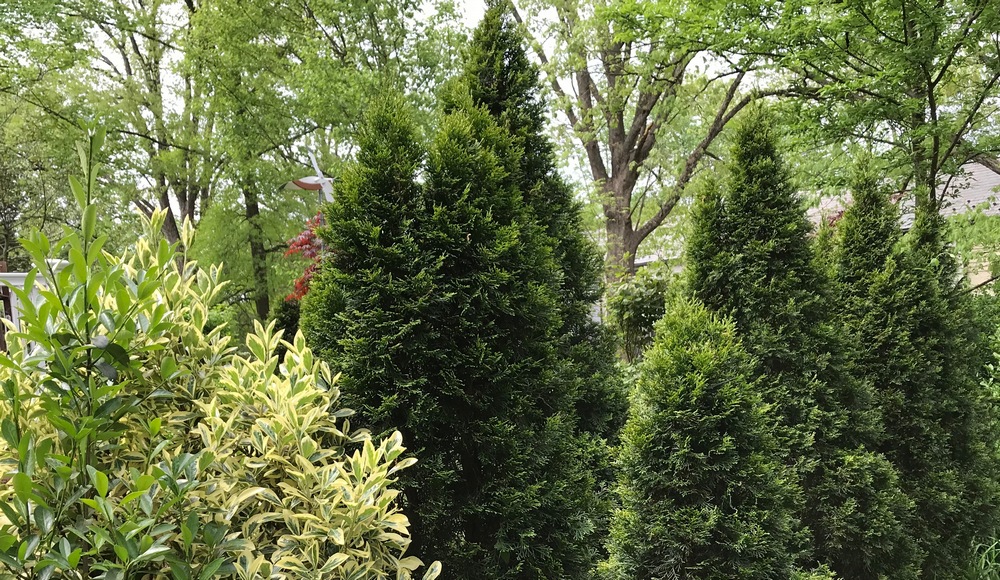 Here in a GHI yard, staggered Arborvitaes and other evergreens create screening. Rather than following the property line, they’re strategically sited to provide screening for the family’s deck.
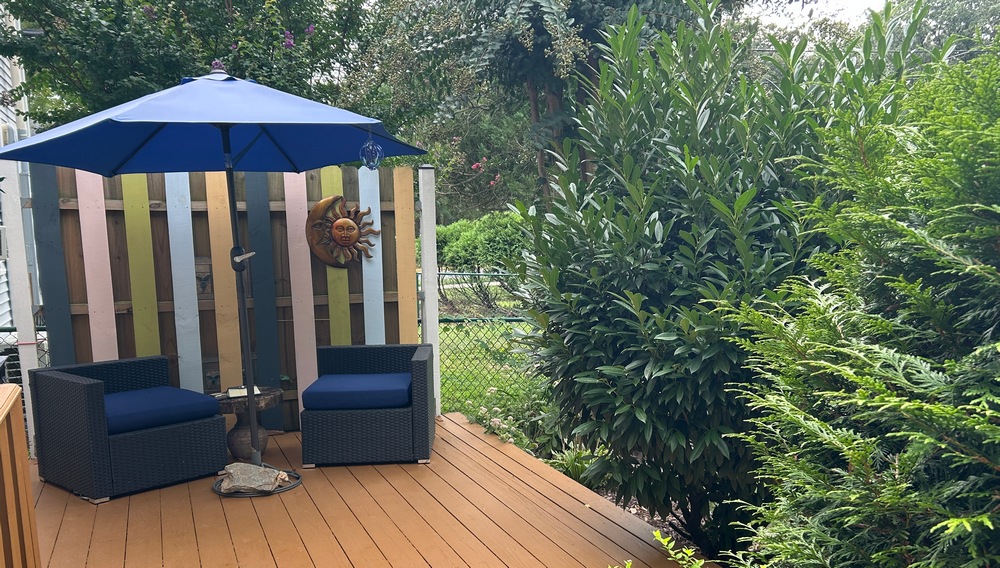
Cherry laurel and a conifer (both evergreen) create screening for this GHI deck and seating area.
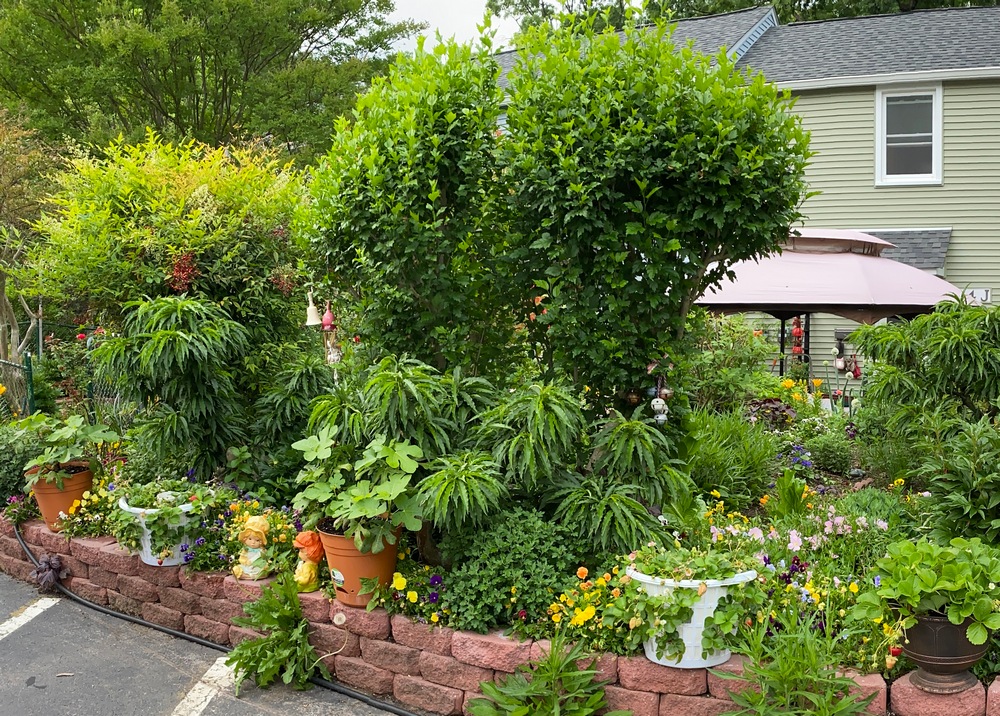
Privacy for the seating area in this GHI front yard comes from a mix of plants, all in a raised border held in place with a short brick wall.
Screening doesn’t have to be evergreen
If you don’t need screening for your seating area during the winter (and who does?), then deciduous (leaf-dropping) plants could easily do the job. The advantages include:
- Most deciduous shrubs can be pruned easily to keep plants off sidewalks, without destroying the plant’s natural shape. The opposite of most conifers.
- Many (or most) are less expensive than evergreens, and they grow faster. Before selecting shrubs, read reviews to make sure their shape will perform as needed (e.g., they may be too leggy).
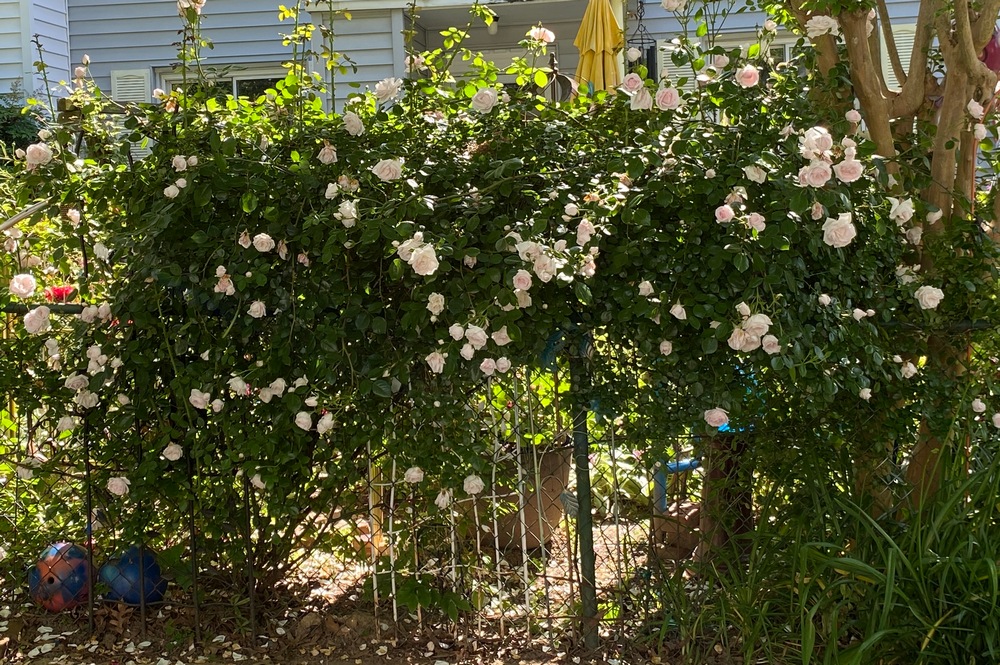 With the support of fencing and trellises, even roses can provide screening, as in this GHI yard.
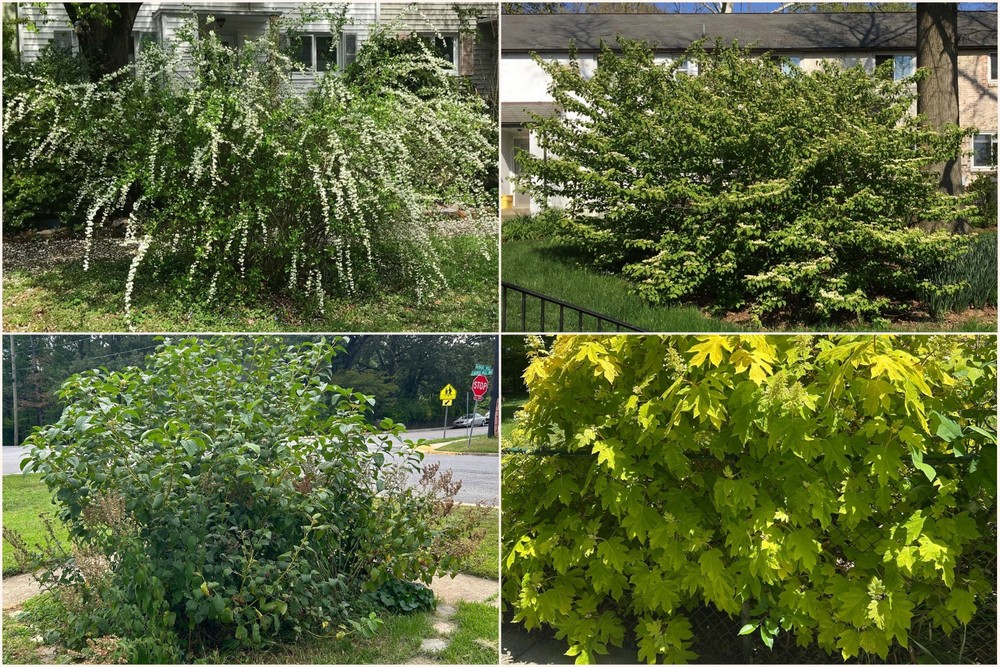
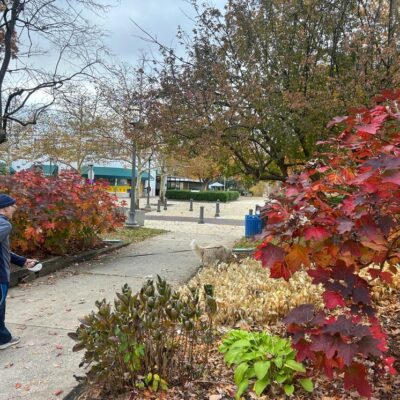
Above are deciduous shrubs that provide screening in various GHI yards and common areas. Two or three of any of them could be used to create a lovely, private seating area.
Mixed plantings of shrubs that create small seating areas
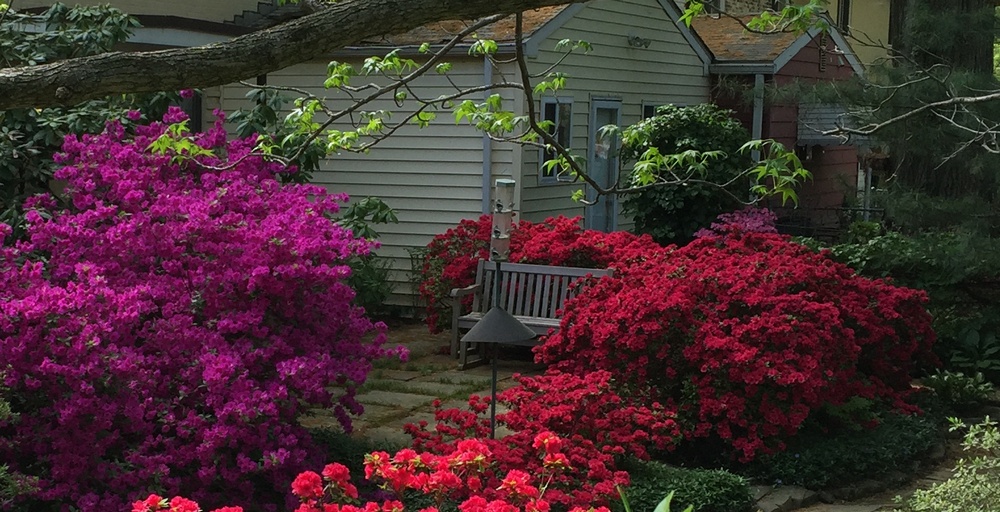 I LOVE this garden filled with azaleas and rhododendrons that create privacy for the patio near the house.
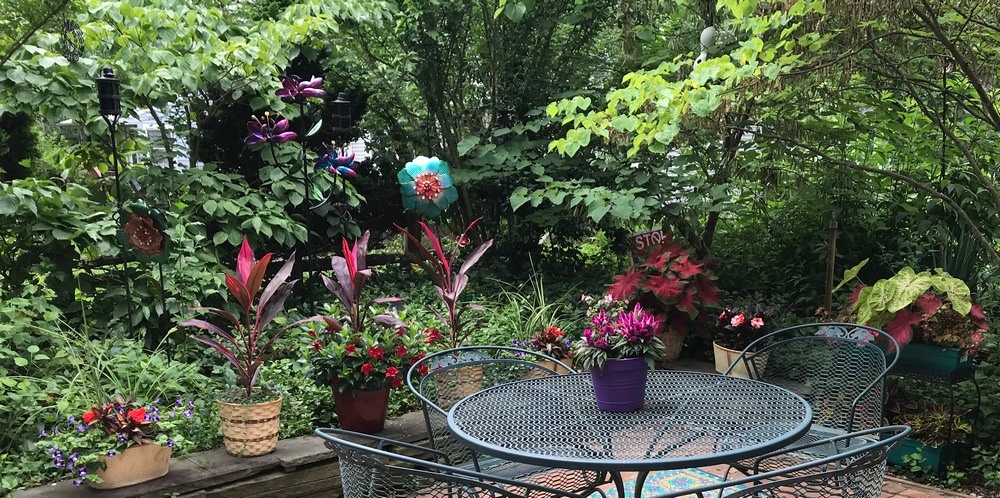 Here’s another charming GHI front yard with screening provided by a mix of plants along the sidewalk. The seating area here is below the grade of the surrounding plants, adding to the privacy. This is the view from the front door.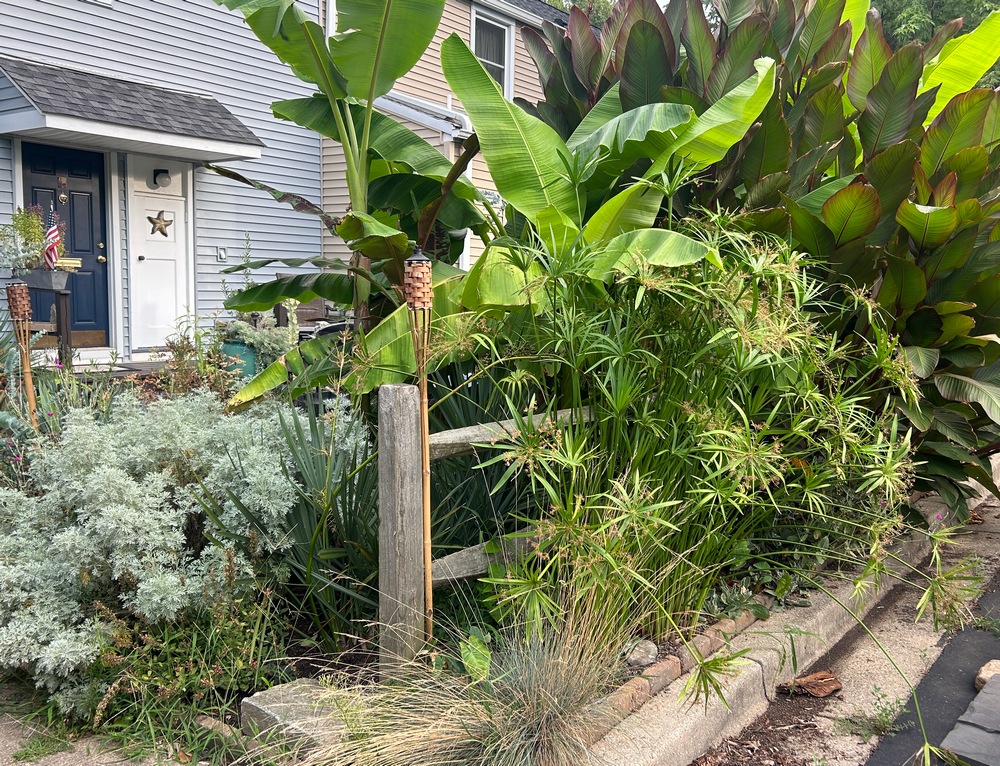
And here’s a particularly exuberant collection of plants creating privacy for the seating area behind them.
Vines on Wires or Trellises
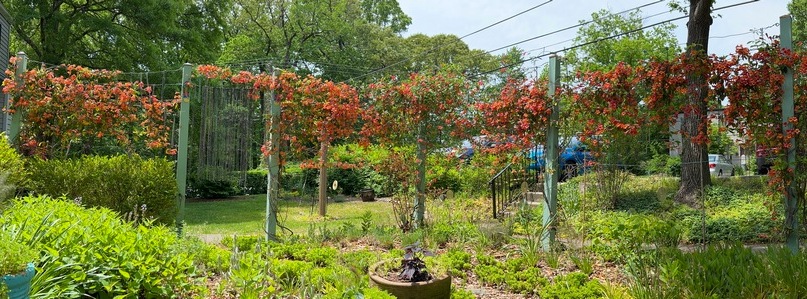
If you have at least a half-day sun, you could grow evergreen Crossvine (Bignonia capreolata), seen here in bloom, screening my view of the street and parking lot from my front yard. It takes quite a lot of tying up to train vines like this, but it’s not hard physical work, and the flowers are amazing! I’ve since added more vines (coral honeysuckle and two types of clematis) that all lose their leaves in the winter, so evergreen Crossvine is my go-to. All of them need a few hours a day of sun, though. (The problem with so many GHI yards – loving the trees but cursing the shade when it comes to buying plants.)
Smaller versions of this can be installed exactly where you need it, perhaps screening a seating area or blocking a particular view, either strung up on wires like the photo above or on a trellis.
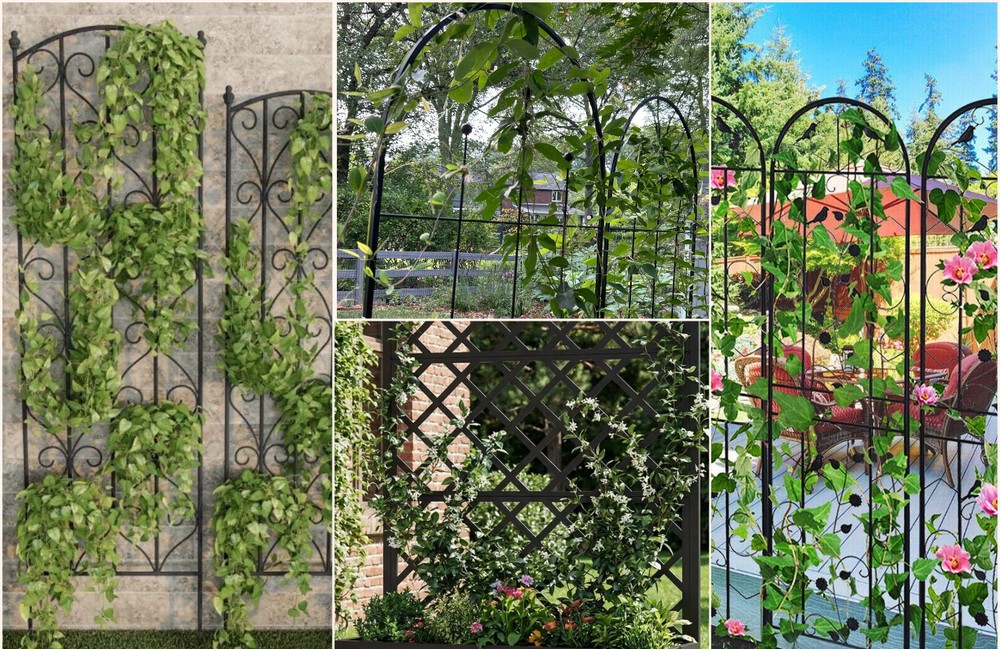
The center top image shows my favorite trellis, and a good buy – 81 inches tall, attractive, and just $45 each from Home Depot. Trellises can be attached to a fence or a rebar pole pounded into the ground.
Built Screens
Another option is building or hiring someone to build some screening, either from wood, vinyl or metal.
Advantages of built screens over screening with plants:
- The result is immediate! That’s compared to waiting years for plants to grow enough to perform as you hope they will, which they may never do. (Been there! Three different species failed for me, and I’m supposed to know what I’m doing.)
- They don’t die of drought, disease, etc. They don’t die, period.
- They don’t get eaten by deer.
- They don’t require sun.
- They’re super-low-maintenance. No pruning required.
- They’re installed far enough from sidewalks, and they stay far enough away. Neither do they have branches that poke us in the eye as we walk down the sidewalk.
- They’re narrow enough to perform in very small spaces – like between next-door neighbors.
- They will never be taller than 6 feet. As for hedges, there’s no height limit and some are at least 20 feet tall.
- There’s less of a walling-off effect, especially when screens are open at the bottom, as with some examples below.
- A safer environment for pedestrians (compared to tall hedges).
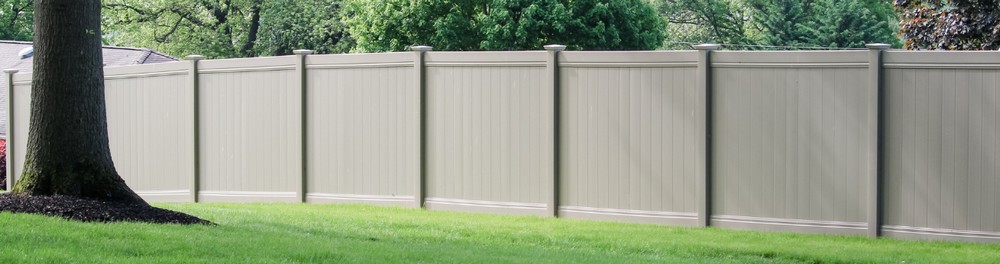
Townhouse back yards are typically enclosed by 6′ tall privacy fencing like this – a walling-off effect that few of us would want to see in Historic Greenbelt. But take a look below at how 6′ fences can look when PLANTS are added! I find these model townhouse gardens very inspiring.
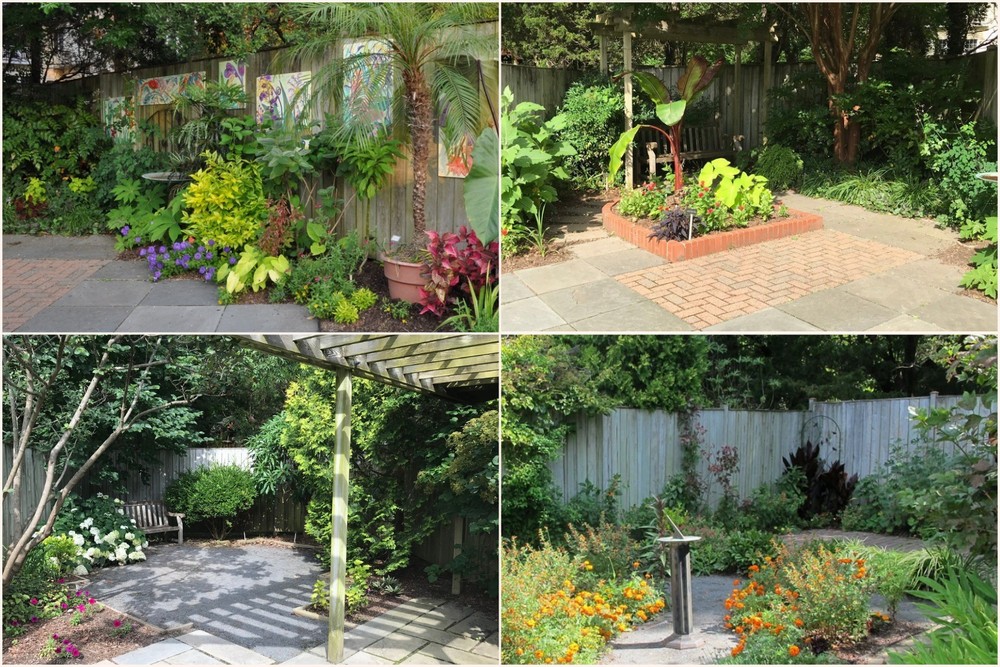
Combination plants and built screen
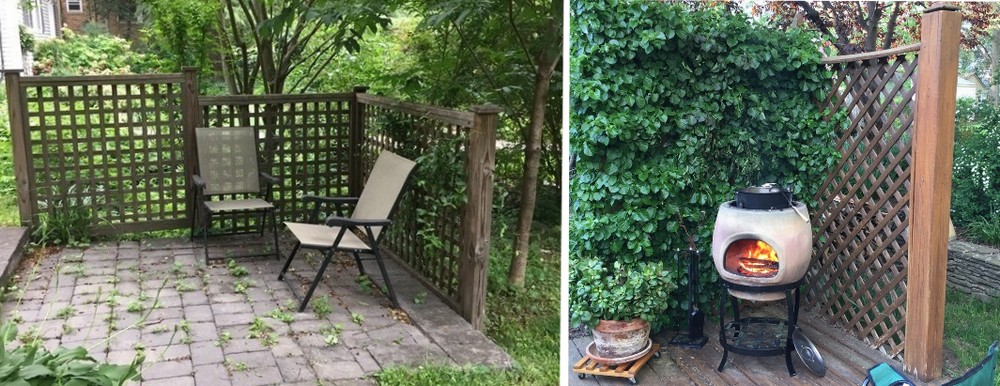
Spreading out the allowed square footage
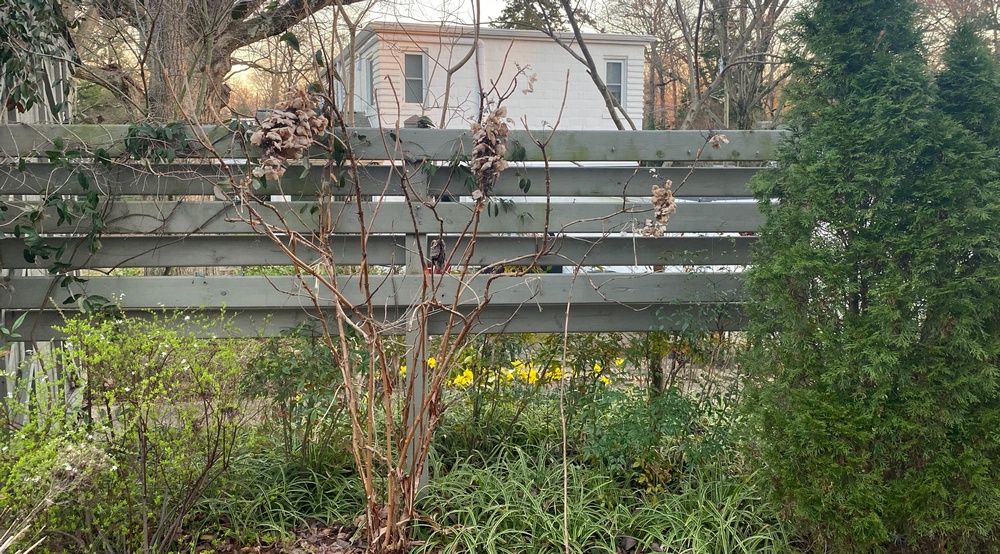
Commonly in GHI, the screens are 6′ tall by 8′ long and right up against the house, between the adjoining units. But it’s not well known that the screens can be constructed in other areas of the yard, AND that the allowed 48 square feet can be spread out. For example, a 48 sf screen could be 3 feet tall by 16 feet long, with the screen elevated 3′ feet above the ground (as long as it’s not taller than 6′). The photo below is of an example.
More open style screening, like lattice
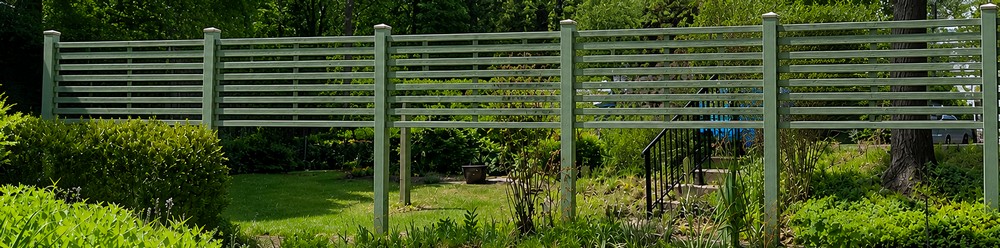
A word about lattice – the rules require that lattices be horizontal, not the common diagonal design, for a good reason. It’s because horizontal lines complement our architecture while horizontal lines clash or conflict. Think of the horizontal speed lines on block homes.
Pinpoint where you need the screen, not along the property line
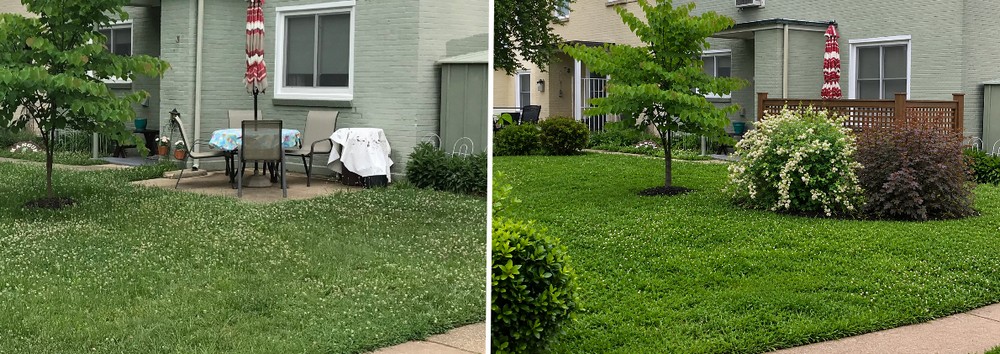
Another option is to avoid screens or plants in straight lines along the property line in favor of building a smaller screen that’s targeted to just where it’s needed. Below is an AI-generated example, with a real GHI yard as-is and then with a screen and two shrubs around the patio. That screened-off seating area could be close to the house or anywhere in the garden.
Screens that could require an exception, depending on size
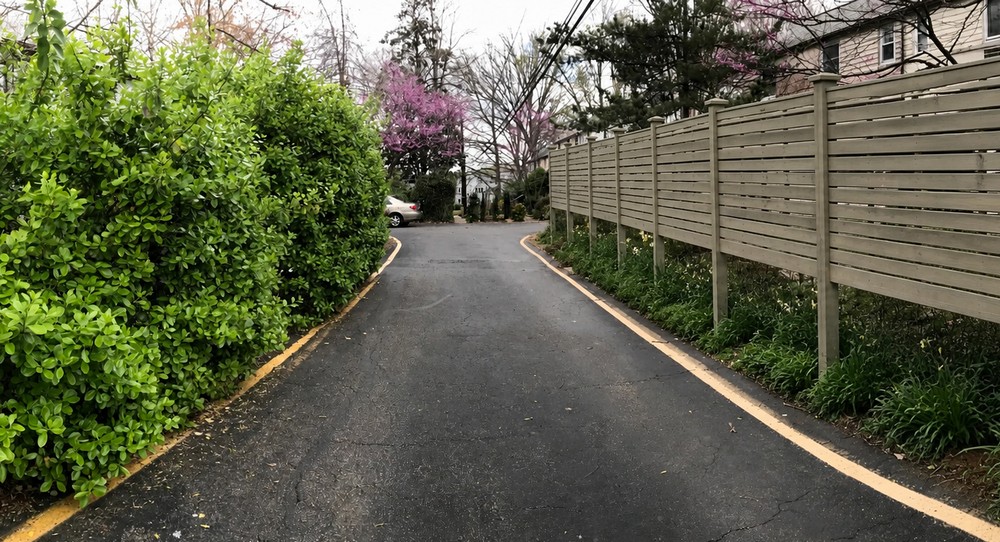
I made this photo to illustrate how much walling off is created by evergreen hedges versus an elevated screen. (The hedges could be even taller – there’s no height limit.) The increased openness makes the space feel safer for residents and passersby.
If more is needed than is currently allowed without exception, I’d love to see someone ask for that exception, perhaps on a trial basis. The reaction of neighbors and others in the community could be gauged, and I bet that many would find it preferable.
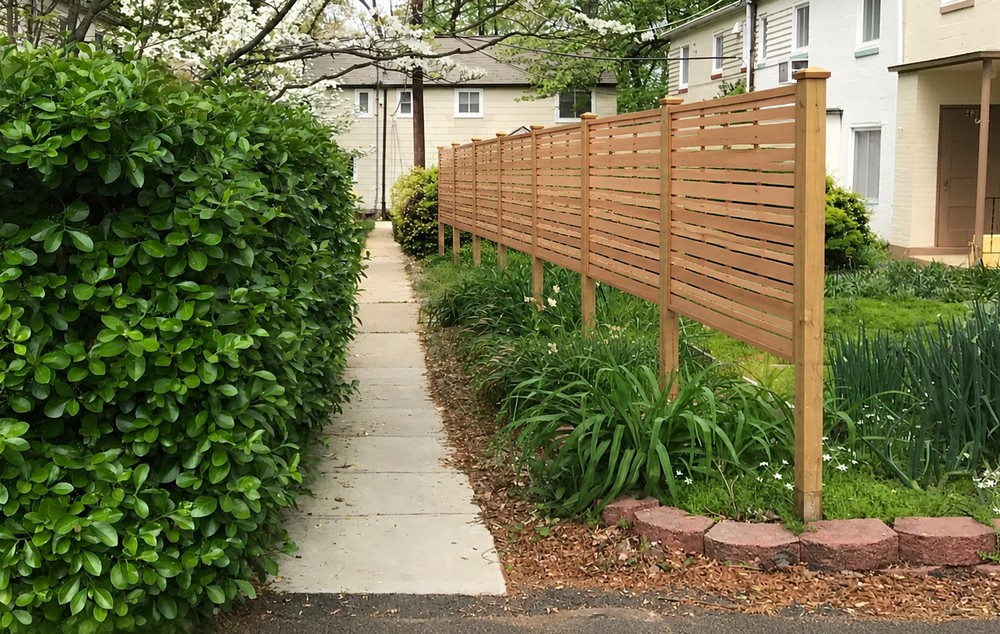
Another side-by-side look at hedges and screens open at the bottom. (My photos with ChatGPT).
What screens are allowed “by right,” under current rules, with no need for an exception
Privacy screens (also called privacy fences) are prevalent in townhouse back yards because proximity to neighbors doesn’t allow for much privacy. But Greenbelt’s original and truly unique concept was for individual yards to be open to neighbors’ yards, so as to facilitate socializing. (Scroll to the bottom of this article for more about Greenbelt’s landscape history.)
That utopian vision of openness meant that only minimal privacy screens have ever been allowed (that I can find evidence of). Currently, each unit is allowed two 48-square foot screens that are no taller than 6 feet. (There are also lots of technical requirements – see the member handbook.)
How do the costs compare?
I’m seeking price estimates – both for plant and built screening solutions.
Fastest, cheapest and easiest solution to spending time in your yard? Screened tents!
I say whatever draws you into your yard, I’m for it, and it may be that protection from insects and rain is all it takes. Also, screened tents seem pretty cheap and easy. GHI allows them up to 100 square feet in size.
Because these features are temporary, only a one-time “notification form of responsibility for temporary structures” needs to be submitted to GHI but no actual permit is required. However, tents may only be in the yard between April 1 and November 1. 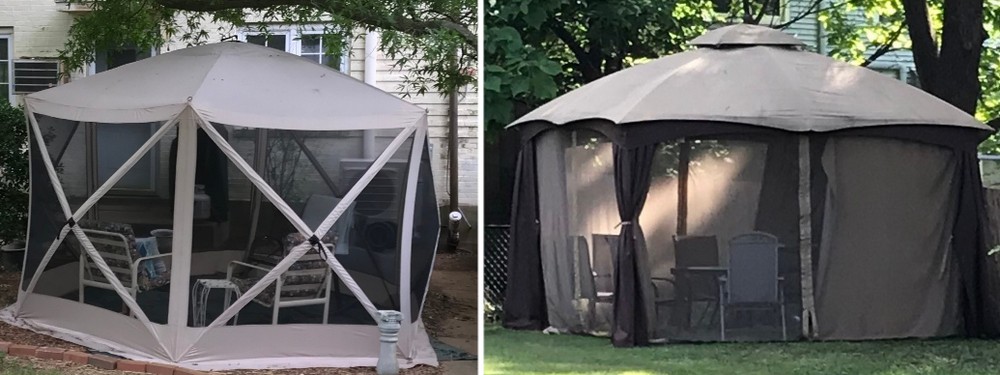
When I spot these tent and others like them in GHI yards I think how smart that is! No bugs or rain and as much privacy as you want (the one on the right has curtains for that purpose). Pricing online starts at about $120 – surprisingly affordable. The tent could sit on woodchips – free from GHI or the city..



Leave a Reply